Stay balanced
A forgotten sense: why balance matters more than you think
What worries you most about getting older?
For many people, the answer is memory loss or dementia.
But what if one of the most important predictors of healthy ageing wasn't memory at all?
While many of us focus on keeping our minds sharp, balance is often overlooked—even though it influences how active, independent and mentally healthy we remain throughout life.
The surprising part?
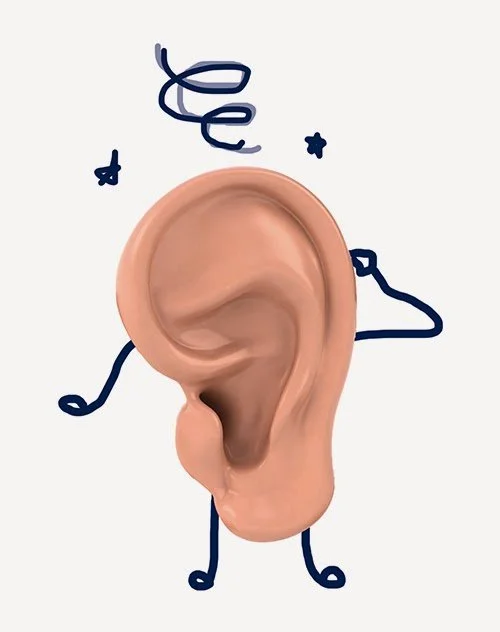
Balance isn't simply about muscles or strong legs. Much of it begins deep inside the ears.
Image: Today’s Transitions
We rarely think about balance...until we lose it
Balance works quietly in the background every second of the day.
You don't usually notice it when walking upstairs, getting out of bed or turning around to answer someone calling your name.
Until something changes.
One in four adults over 65 experiences a fall each year. A broken hip, fractured wrist or shoulder injury can quickly lead to weeks—or even months—of reduced activity.
The consequences don't stop there.
Less movement means less stimulation for the brain, less social interaction and fewer opportunities to stay physically fit. Prolonged inactivity can even affect the hippocampus—the area of the brain that plays an important role in learning and memory.
Sometimes, protecting memory starts by protecting mobility.
Image: Complete Anatomy
Could you pass this simple balance test?
Before reading any further, try this.
Stand near a kitchen worktop or sturdy chair.
Lift one foot off the floor.
Can you balance for 10 seconds?
Now imagine doing the same thing with your eyes closed.
Even younger adults immediately notice how much harder it becomes.
Why?
Because balance depends on information arriving from three different systems working together:
Your eyes, which tell you where you are in space.
Your muscles and joints, which constantly send information about body position. This is called proprioception—your body's internal sense of where your arms, legs and joints are without having to look at them.
Your inner ear, home to the vestibular system—your body's built-in balance and motion sensor.
If one system becomes less reliable, the others have to work much harder.
Image: Fyzical
Your inner ear: the hidden organ of healthy ageing
Most people think of the ears as organs for hearing.
In reality, they also contain the vestibular system—a remarkable network of tiny fluid-filled canals and sensors that detect movement, head position and acceleration.
Every time you stand, walk, bend down or turn your head, your inner ear is sending rapid information to your brain.
It helps stabilise your vision while you're moving, coordinates posture and keeps you upright without you having to think about it.
As we age, these signals can become less accurate.
The encouraging news?
Like many parts of the brain and body, the balance system can often be trained.
Balance is surprisingly trainable
The good news is that balance responds well to practice.
Simple activities such as:
standing on one leg
walking regularly
yoga
Tai Chi
hiking on uneven ground
- all gently challenge the balance system.
Even walking is more complicated than it appears!
Every step is actually a tiny cycle of controlled imbalance.
You shift your weight...
Briefly become unstable...
Then regain your balance before taking the next step.
Your brain repeats this process thousands of times during a walk.

Uneven surfaces, woodland paths and hills ask even more of your balance system, encouraging your brain, muscles and inner ears to work together.
Image: naturalresources.wales
Sleep matters too
Have you ever noticed feeling less steady after a poor night's sleep?
Many people become slightly less balanced when they're tired.
Sleep affects attention, reaction speed, coordination and how efficiently the brain processes sensory information.
It's another reminder that healthy ageing isn't about one magic solution.
Balance, movement, sleep, hearing, vision and brain health all work together.
We often accept changes that we should question
As we age, we often assume physical changes are simply "part of getting older."
"My knee hurts."
"My balance isn't what it used to be."
"I feel a bit unsteady."
But age alone isn't always the explanation.
Think about this:
"My other knee is the same age, and that one doesn’t hurt."
Sometimes our bodies are telling us something can be improved—not simply accepted.
What about driving?
Balance and the inner ear don't just help us stay upright.
They also work closely with vision.
The vestibular system helps keep our eyes stable while our head moves, allowing us to judge speed, movement and surroundings accurately.
This becomes especially important when learning to drive and again in later life.
Safe driving relies heavily on peripheral vision—the ability to notice movement and hazards outside the centre of your gaze.

Interestingly, peripheral awareness is often weaker in both new young drivers and many older adults, making this an important area of lifelong visual and balance health.
Image: Vision Care Center
The daily connection
As The Sound Teacher, much of my work centres around helping people understand the remarkable connection between hearing, listening and the vestibular (balance) system.
Many people are surprised to discover that the inner ear is involved in far more than hearing alone.
It contributes to posture, movement, coordination, attention, confidence, spatial awareness and overall wellbeing.
Supporting the way the brain processes sensory information—including the information coming from the ears—can therefore be an important part of helping people remain active, engaged and independent in daily life.
Pay attention
Perhaps we should stop thinking of balance as something we only notice after a fall.
Instead, we can think of it as a skill that deserves regular attention—just like strength, memory or cardiovascular fitness.
If you're concerned about healthy ageing, don't only ask:
"How's my memory?"
Ask yourself:
How's my balance?
Am I moving enough?
Am I challenging my body in different ways?
Am I sleeping well?
Am I giving my brain and inner ears opportunities to keep learning?
Because the remarkable thing about balance is this:
Balance helps us move with confidence, stay socially connected and continue living life on our own terms.
If this blog resonates, you may find this guide helpful:
Free Guide: Why Anxiety, Balance & Focus Often Start in the Ear
A simple guide to understanding how the ear, movement and nervous system are connected.
