Sound asleep
Use your eyes to fall asleep faster
Falling asleep is not always about being tired—it is often about getting your brain to let go of your body. Many people stay awake because they are hyper-aware: this feels uncomfortable, I need to move, something’s off.

Hyper-aware:
This feels uncomfortable, I need to move, something’s off.
From my professional experience working with sound therapy and the vestibular system (your inner ear + balance system), this is where things get really interesting. Sleep begins when your brain reduces proprioception—your awareness of body position—and shifts into a more passive, drifting state.
I’ve been using the routine below for the past few months, and it genuinely works. It’s simple, practical, and gives your mind something gentle to focus on.
A simple eye movement routine to help you fall asleep
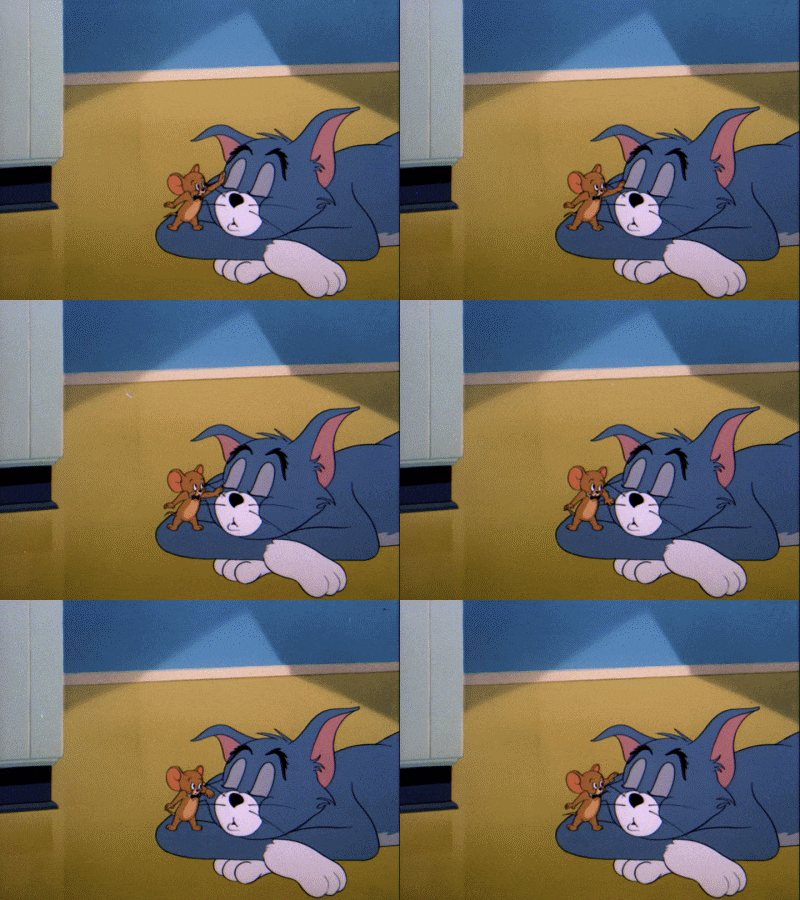
Try this tonight:
Close your eyes
Slowly move them side to side
Circle them anti-clockwise, then clockwise
Look up and down
Gently cross your eyes toward your nose as you exhale slowly
Why this works
Your vestibular system works closely with your eyes and brain (especially the cerebellum) to track movement and body position. These slow eye patterns mimic the natural shifts that happen as you fall asleep.
Combined with calming sound (like soft, rhythmic audio), this helps your brain transition away from active awareness and into rest. It’s similar to the soothing effect of gentle rocking—your system starts to “switch off” positional tracking.

Your eyes gently move in sync with your balance system helping your brain “lose track” of your body.
The real benefit
If your mind races at night, this gives it something to do—instead of telling yourself to “just sleep” (which rarely works).
By guiding your eyes and engaging your vestibular system, you gently move out of overthinking and into sleep.
Credit: Inspired by insights from Andrew Huberman on using simple, science-backed eye movements to support sleep. No apps or gadgets—just physiology.
I’ve been using this myself for months, and it really works!
If this blog resonates, you may find this guide helpful:
Free Guide: Why Anxiety, Balance and Focus Often Start in the Ear
A simple guide to understanding how the ear, movement and nervous system are connected.
No spam. Just practical, supportive guidance.
If you’d like to explore personalised support, you’re welcome to browse my programmes or book a consultation.
