Walking counts
We need to start with the ears
As an auditory (sound) therapy practitioner, I spend my days helping people reconnect with one of the most overlooked control systems in the human body: the ears.
Not just hearing—but regulation.
Because your ears are not passive receivers of sound. They are active, dynamic regulators of movement, balance, coordination, and even emotional state.
And here’s the part that surprises most people:
Your body’s ability to move well is deeply rooted in two key systems:
The tiny muscles of the middle ear
The vestibular system (your balance and spatial orientation system)
Together, these systems constantly scan, interpret, and respond to the world around you—guiding posture, muscle tone, and movement in real time.
So when we talk about movement as medicine… we need to start with the ears.
The missing link: movement, sound, and regulation
Modern life has quietly removed one of the most essential inputs your nervous system needs: frequent, gentle, forward movement.
We sit. We focus. We stay still.
But your vestibular system (inner ear) thrives on motion—especially walking.
Forward walking creates something called optic flow—a steady stream of visual and sensory input that tells your brain:
“You are safe. You are moving. You are regulated.”
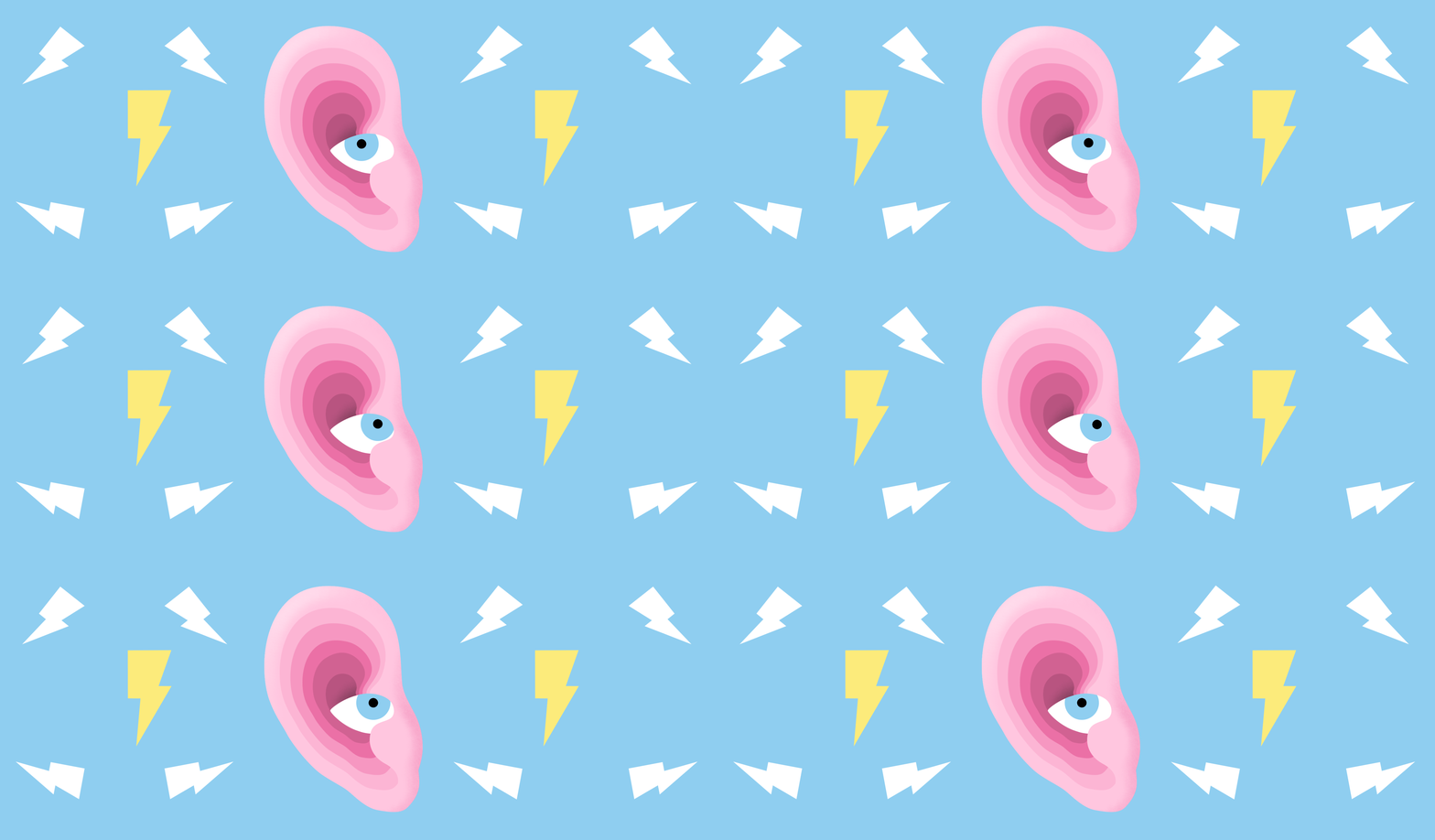
This has a direct calming effect on the limbic system (your emotional brain), reducing anxiety and helping your nervous system settle.
From an auditory therapy perspective, this is gold.
Because when the vestibular system is engaged through walking:
Muscle tone becomes more organised
Coordination improves
Stress pathways quieten
The entire body moves with more ease
Walking is not exercise
It’s regulation. We’ve been taught to think of movement as something we schedule.
But biologically, that’s not how the body works.
Movement used to be built into every part of our day. Now, we try to “replace” it with a workout—and the body simply doesn’t respond the same way.
What your system actually needs is frequent, low-grade muscle contraction throughout the day.
Because here’s the physiology:
When you walk—even gently—your muscles contract. And when muscles contract, they act like metabolic engines:
They pull glucose out of the bloodstream
They improve insulin sensitivity
They activate mitochondria (your energy producers)
This is why even 10 minutes of walking after a meal can significantly reduce blood sugar spikes.
It’s not about intensity. It’s about consistency.
The science is clear
Walking is one of the most powerful interventions we have for whole-body health:
Walking after meals stabilises blood glucose
Around 7,000 steps per day is linked to up to 70% lower risk of all-cause mortality
Walking boosts dopamine, serotonin, and BDNF (supporting brain health and mood)
Morning walking helps reset circadian rhythms and improves sleep
Sensory input from walking reduces stress and anxiety

As Dr. Casey Means put it:
“If walking were a pill, it would be the most impactful pill in modern medicine.”
So why aren’t we doing it?
Because our environment doesn’t support it. Work, emails, calls, admin—most of it happens sitting down.
And this is where something simple—but powerful—comes in: Rebuilding movement into your existing life.
Not adding more. Just changing how you do what you already do.
The walking pad: a modern nervous system tool
A walking pad is not about fitness.
It’s about integration.
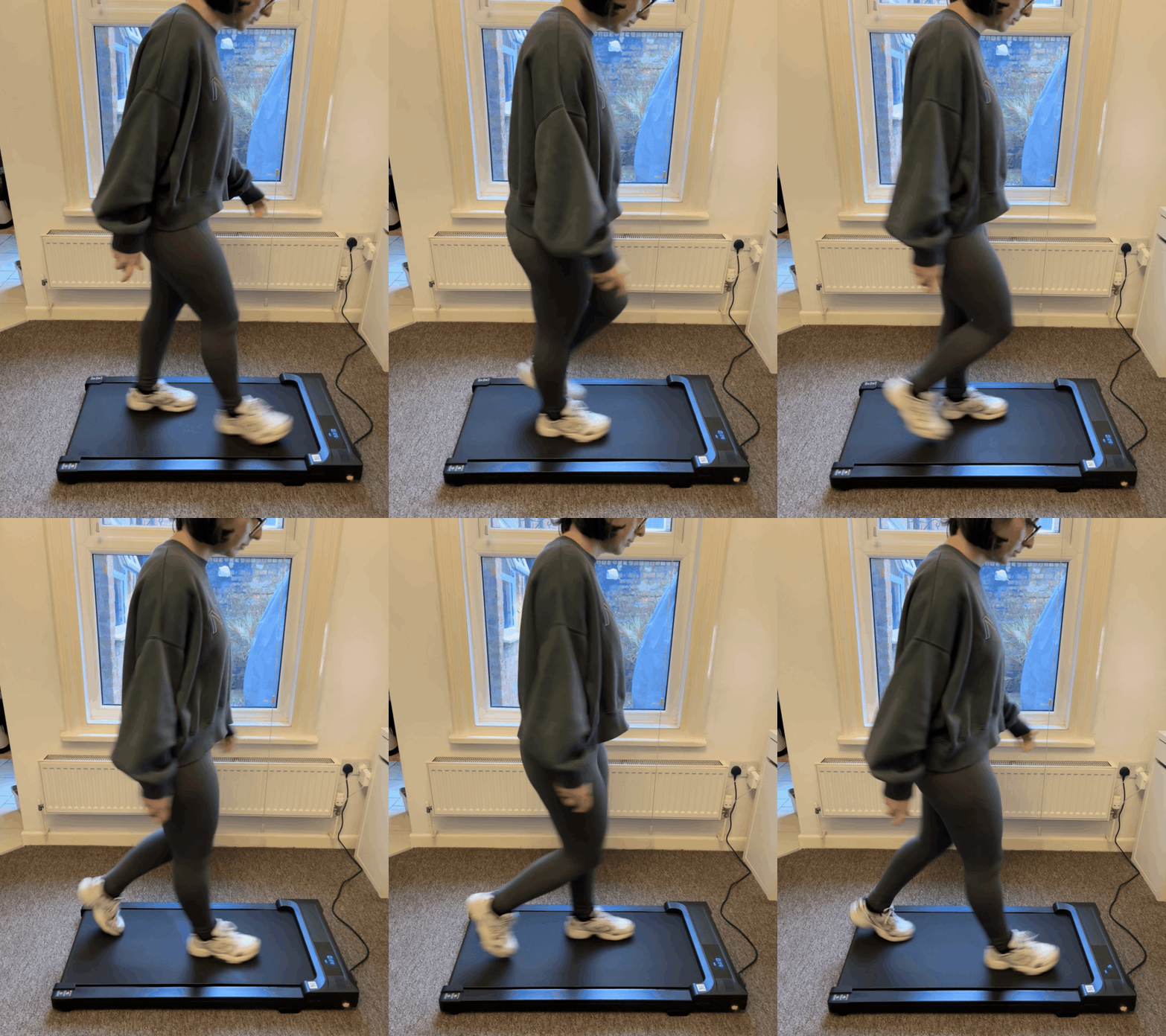
It allows you to:
Walk while working
Take short movement breaks every 30 minutes
Stay in a regulated, gently active state throughout the day
From a therapeutic perspective, this is incredibly valuable.
Because instead of long periods of stillness (which dysregulate the vestibular system), you create a steady rhythm of movement that supports:
Postural control
Nervous system balance
Metabolic health
An example of a high quality and robust walking pad is the UREVO:
You can find a detailed UK review of the best walking pads in 2026 here.
Dr. Casey Means, MD, a physician trained at Stanford University School of Medicine, an expert on metabolic health and the author of the book, "Good Energy" discusses how to incorporate the walking pad into your busy day:
Daily walking rhythm
If you want to support both your metabolic health and your nervous system, keep it simple:
1. Post-meal reset
Walk for 10 minutes after meals
→ This helps move glucose out of the bloodstream efficiently
2. Movement snacks
Every 30 minutes, walk for a few minutes
→ Keeps your system metabolically and neurologically active
3. Daily baseline
Aim for around 7,000 steps
→ Focus on consistency, not perfection
4. Morning light + movement
Walk early in the day if possible
→ Supports circadian rhythm and sleep quality
Why this matters more than you think
When you walk, you are not just “burning calories.”
You are:
Training your vestibular system
Organising your nervous system
Supporting your ear-brain-body connection
Regulating stress at a sensory level
Activating the body’s natural metabolic processes
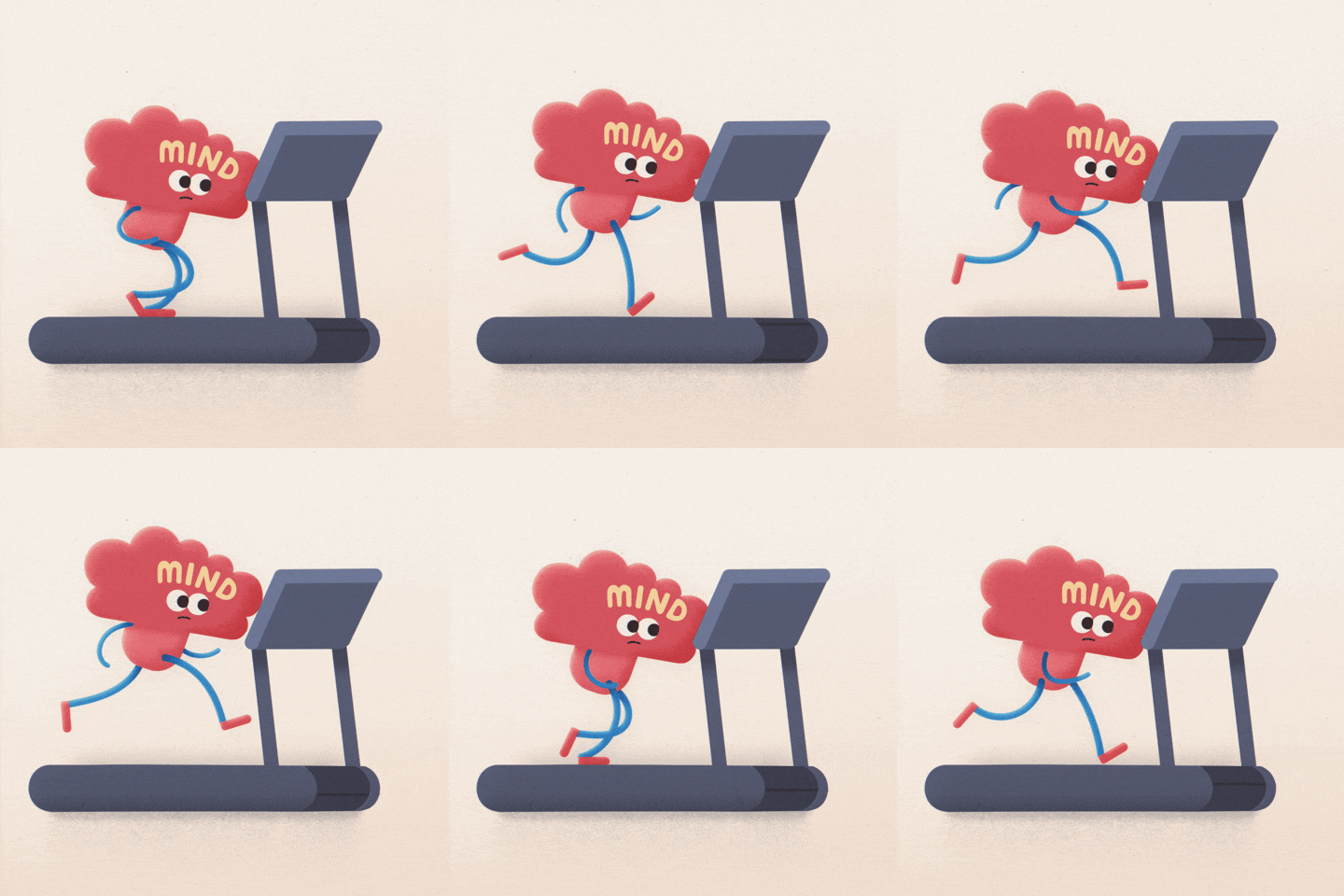
In other words…
You are giving your body and mind exactly what it was designed to receive.
A final thought
In auditory therapy, we search for solutions to support the body and nervous system. But sometimes, the most profound interventions are the simplest ones.
Walking is one of them.
And in a world that no longer gives us movement naturally, tools like a walking pad can help us restore something essential:
A body that is designed to move—and a nervous system that depends on it.
If this blog resonates, you may find this guide helpful:
Free Guide: Why Anxiety, Balance & Focus Often Start in the Ear
A simple guide to understanding how the ear, movement and nervous system are connected.
No spam. Just practical, supportive guidance.
If you’d like to explore personalised support, you’re welcome to browse my programmes or book a consultation.
