Listen, AI…
Growing up with AI: What happens to listening?
AI is becoming part of everyday life. It can write an essay, create an image, answer a question, generate a lesson plan and increasingly interact with us in ways that can feel remarkably human.
It is understandable that parents, carers and educators are asking what this means for children growing up with AI. Will it change the jobs they do, their ambitions, their learning and their relationships?
These are important questions. But there is another one I think we should be asking:
What happens to listening?
Not simply hearing sounds, but the complex human process of listening, through which:
a baby learns that a particular voice means safety
a child learns language and turn-taking
and a young person learns to navigate emotion, humour, disagreement and relationships.
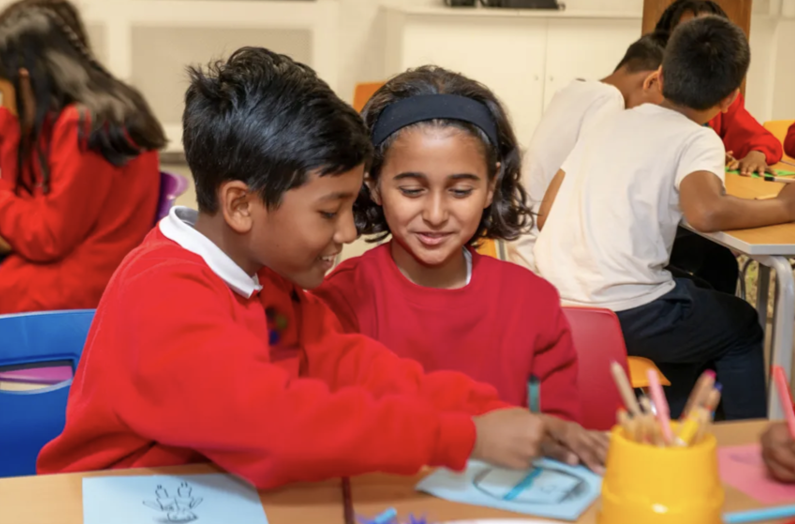
Image source: London Museum
This question is particularly relevant to my work with infants, children and young people where listening, communication, attention, regulation or development may already present challenges. What happens when instant AI interactions replace some of these experiences?
This isn't an argument against AI. It is an invitation to think differently about what AI can provide — and what still needs to come from human interaction.
AI can copy communication. But can it listen?
Consider a young child who learns language partly through favourite films or characters. They may reproduce whole phrases, intonation patterns or even an accent with remarkable accuracy. But imitating language is not necessarily the same as acquiring communication.
Communication develops through interaction. A baby makes a sound and someone responds. A child points and someone follows their gaze. A child says something unexpected and another person interprets it, perhaps misunderstands it, repairs the misunderstanding and continues the conversation.
This is not simply an exchange of information. It is reciprocal listening — and reciprocity is something we experience with our whole bodies.
What if your conversation partner always agrees?
This is already more than a hypothetical concern. Ofcom's research shows that AI is becoming part of everyday life for UK children, with more than half of 8–17-year-olds using AI tools and around one in ten saying they have used AI as someone to talk to or "as a friend." Ofcom, Children's Media Literacy Report 2025
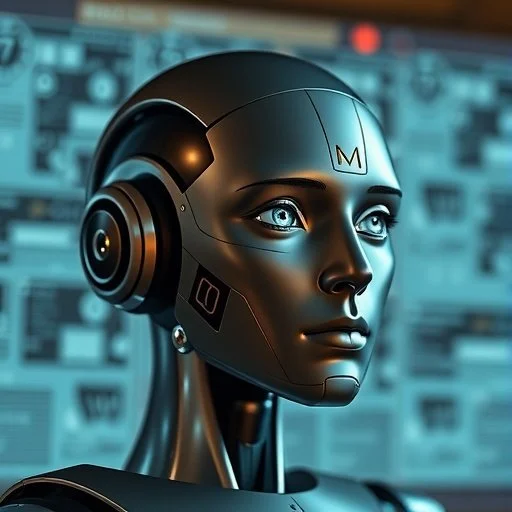
An AI assistant can be patient, endlessly available and ready with another answer or compliment.
Image source: scienmag.com
Real relationships are different. People disagree, misunderstand one another, ask us to explain ourselves and sometimes simply say no.
Learning to communicate isn't just about producing the right answer and receiving an approving response. It is about negotiating meaning with another person.
That is why children using AI need to learn not only how to ask better questions, but how to question the answers: Who said this? How do you know? Could it be wrong? What do you think? Do you agree?
In an AI world, the ability to listen critically may become more important, not less.
When AI removes the process
AI can make things incredibly quickly. An image, graph, story or presentation can appear almost instantly.
But what happens to the process? The drawing that took twenty minutes because a child kept rubbing it out. The graph that had to be redrawn. The repeated attempts at forming a letter. The rhythm of practising a piece of music. The frustration, waiting and discovery that come from doing something again and again.
For a developing brain, these aren't simply inefficient steps on the way to the finished product. The process is part of the learning.
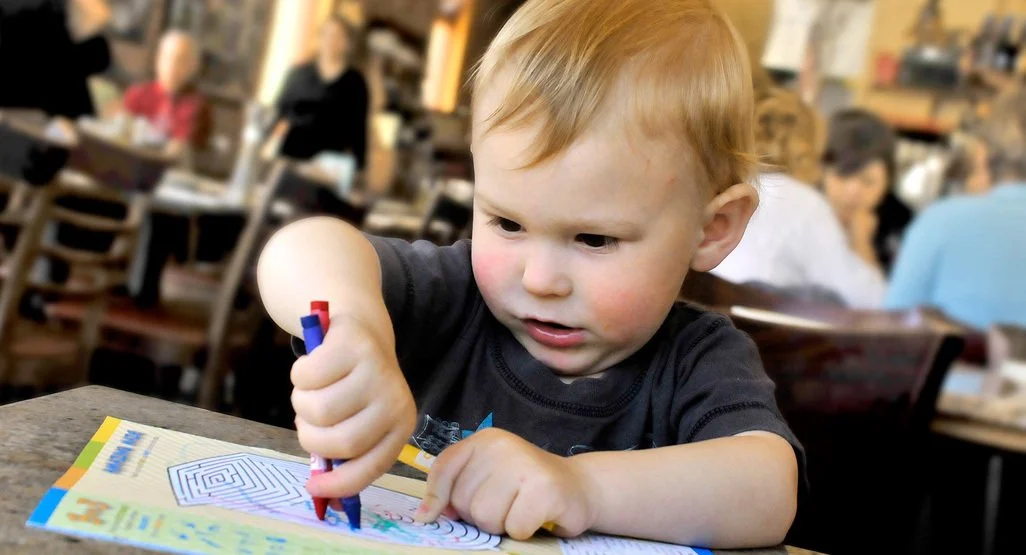
Human development is deeply embodied. We see, hear, move, touch, speak and feel. We repeat, make mistakes, adjust and try again. That takes time.
Image source: babycentre.co.uk
AI is exceptionally good at removing time. We need to think carefully about when that is helpful — and when the time itself is the point.
Ofsted has similarly raised concerns about over-reliance on AI, highlighting the risk of replacing valuable learning processes with instant answers and outcomes. Ofsted Annual Report 2024/25
Four things human listening gives us
This is why I keep coming back to listening. Human listening is much more than receiving information through the ears. It happens within a body and within a relationship.
Presence. When someone is genuinely present, we experience their voice, timing, expression, movement and emotional response. We can sense when something we have said has truly landed.
Shared attention. A baby follows a parent's gaze. A teacher notices where a pupil is looking. A parent senses that their child is becoming overwhelmed before the child has found the words to explain it.
Resistance. Real people question us, challenge us, misunderstand us and sometimes say no. That resistance can make us listen more carefully, rethink what we meant and find another way to communicate.
Time. Human learning needs rhythm, repetition, pause, practice and patience. A song listened to repeatedly, a word spoken many times, a movement practised until it becomes easier — these experiences don't simply provide information. They help build and consolidate learning.
We are more than prediction machines
Perhaps this is what gets overlooked in the AI conversation.
We sometimes talk about human beings as though our greatest achievement is our ability to process information, and therefore the obvious question is whether a machine can process information better.
But humans are not simply prediction engines. We are multi-sensory, social and embodied beings. We experience the world through sound, movement, touch, sight, emotion, memory, anticipation and relationship.
A child doesn't learn to communicate simply because they have been given enough examples of language.
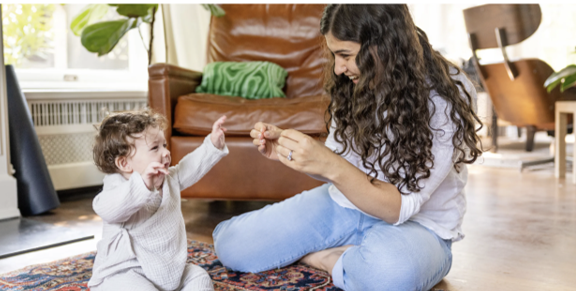
They learn because somebody responds, listens, misunderstands them and tries again. Somebody laughs, says no, waits and notices.
Image source: lovevery
Through thousands of these small interactions, a child discovers what it means to be another person among other people.
So perhaps the question isn't simply:
"Will AI take over?"
Perhaps the more useful question is:
"What are we going to make sure remains deeply human?"
If AI can save us time, perhaps we can use some of that time for more conversation, movement, music, making, playing, looking at one another and, above all, listening.
AI may become increasingly sophisticated at generating responses. But human development still depends on something very different:
…being heard, hearing others and learning to listen.
That is something worth protecting.
If this blog resonates, you may find this guide helpful:
Free Guide: Why Anxiety, Balance & Focus Often Start in the Ear
A simple guide to understanding how the ear, movement and nervous system are connected.
